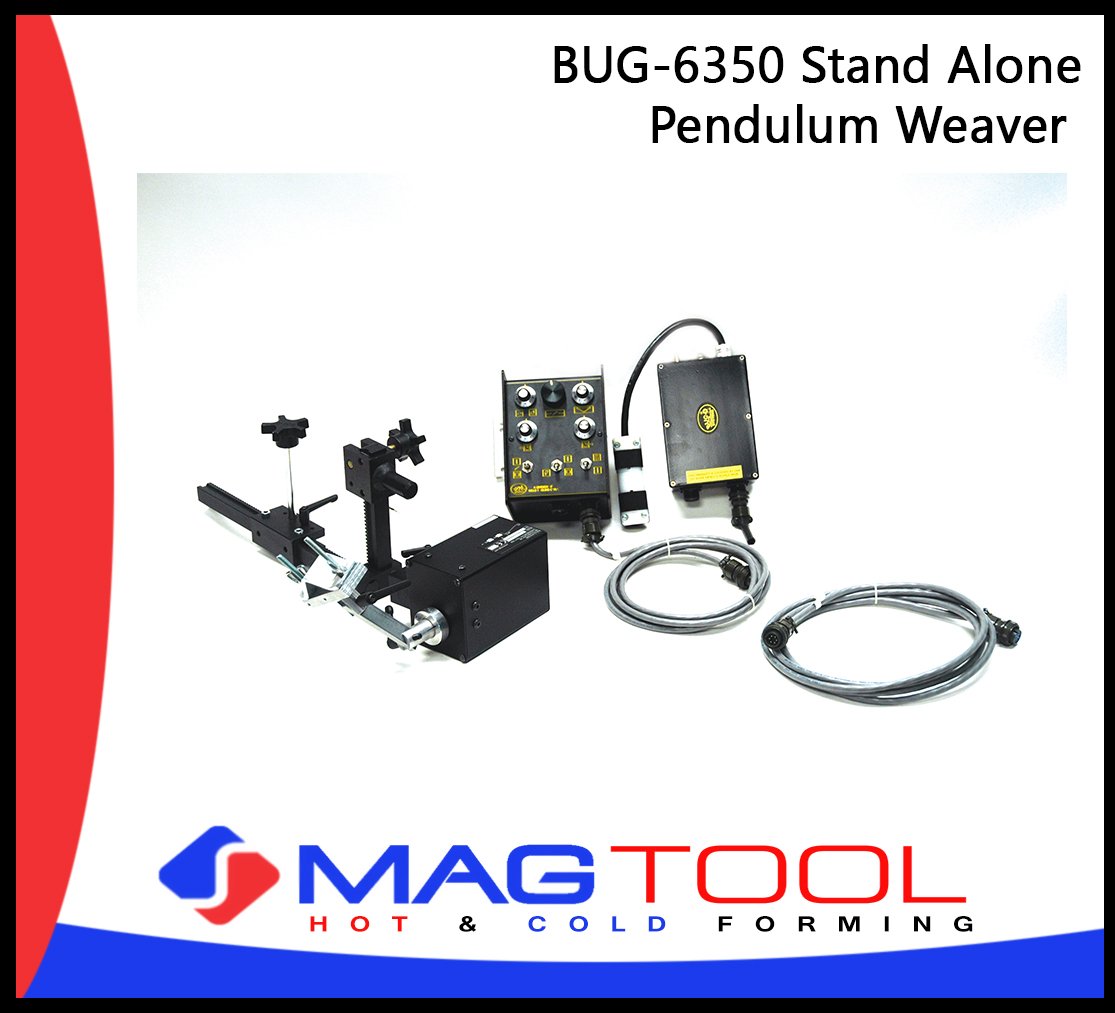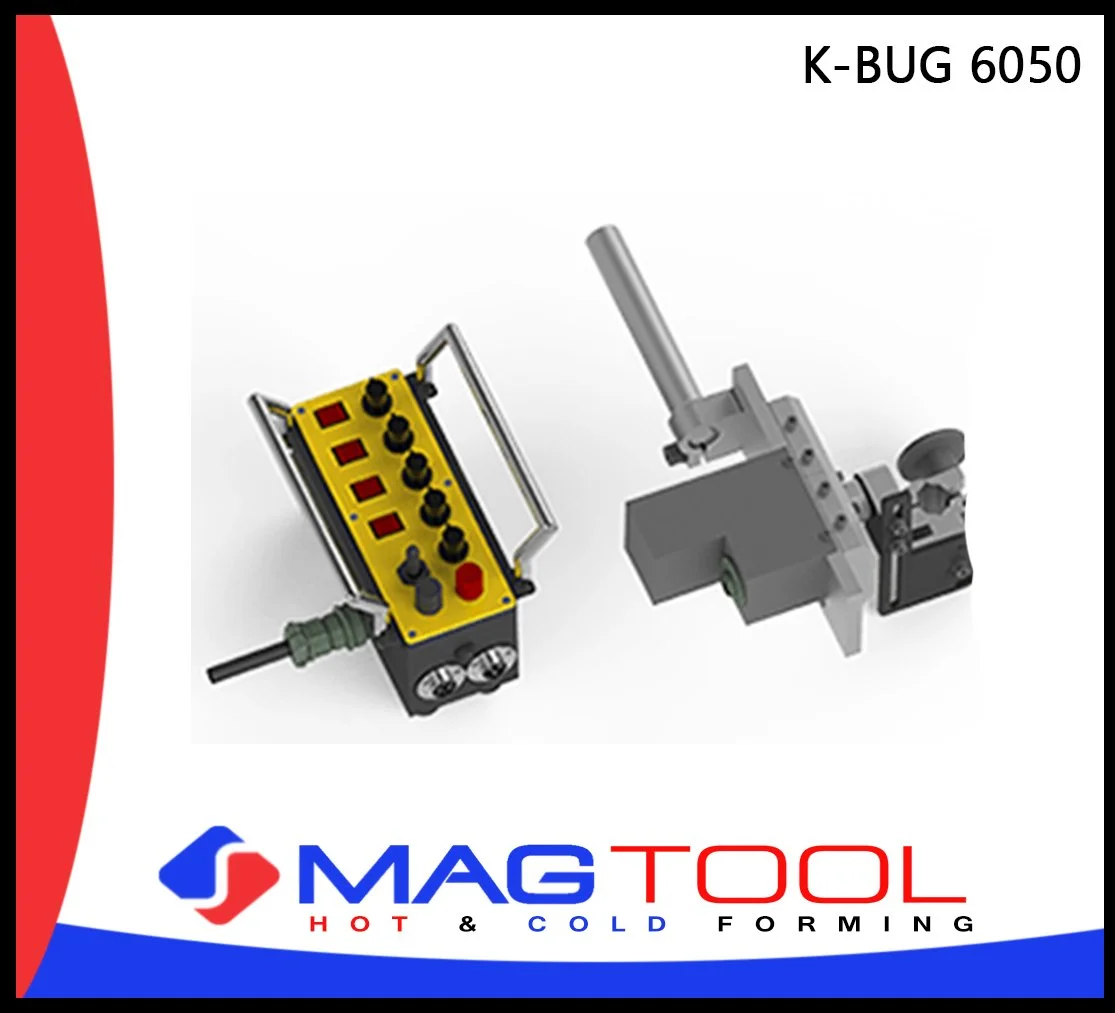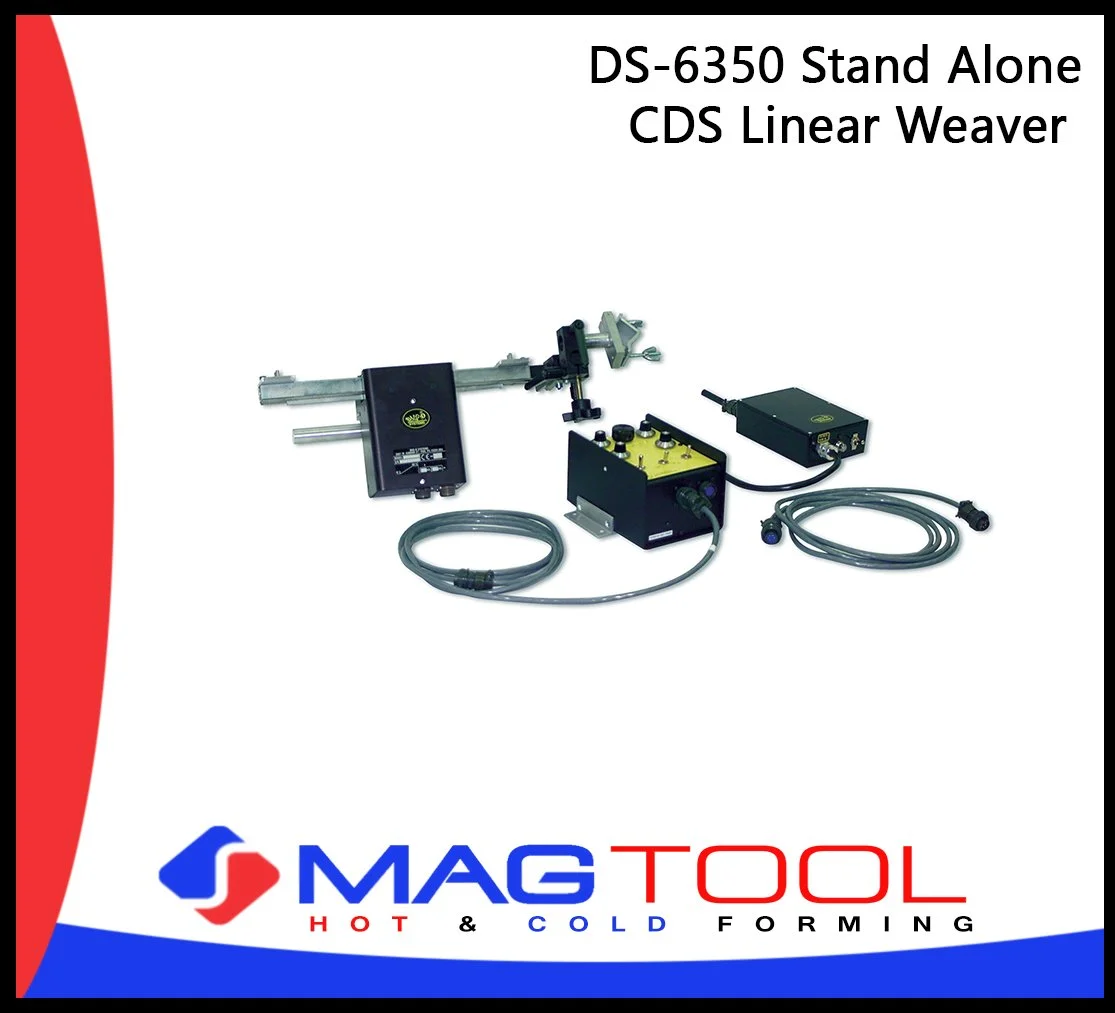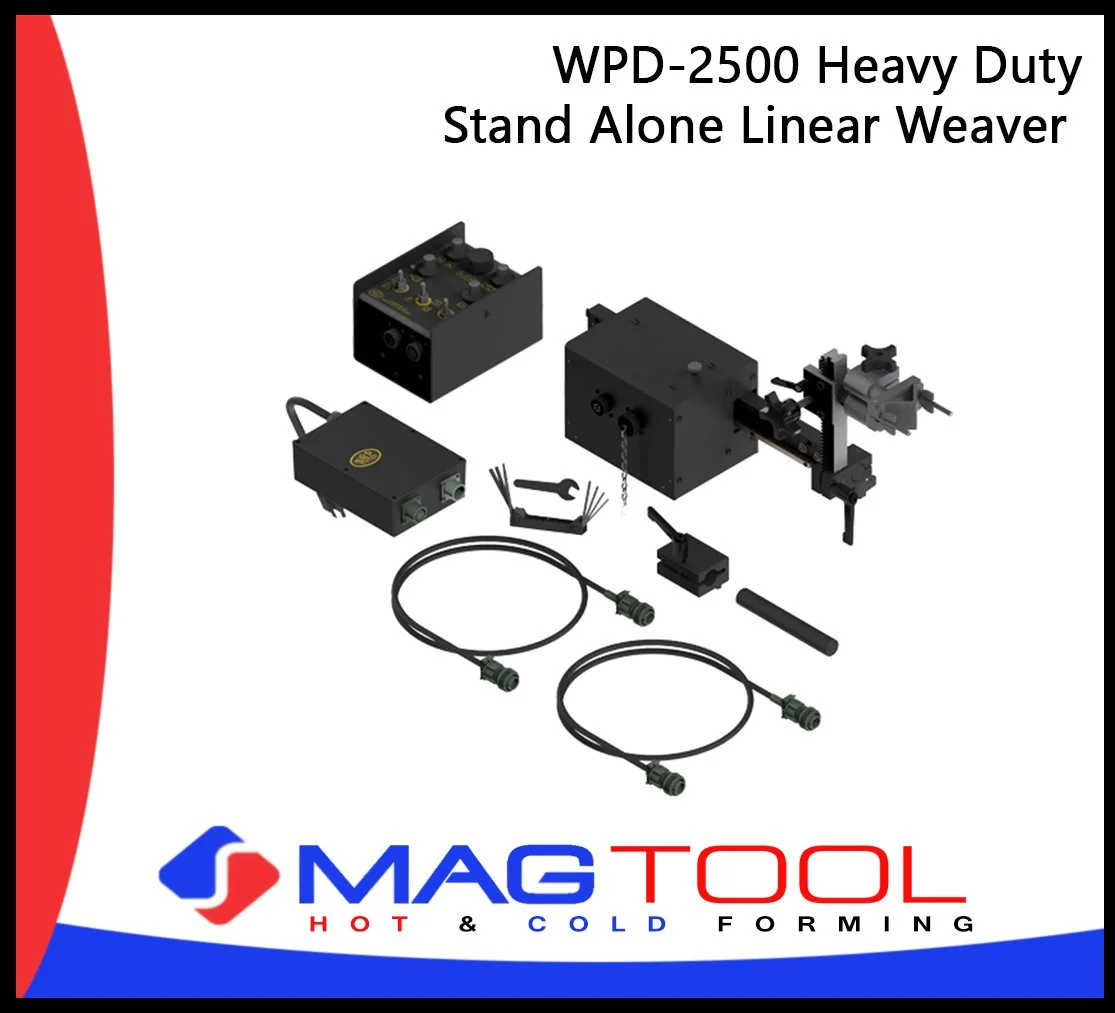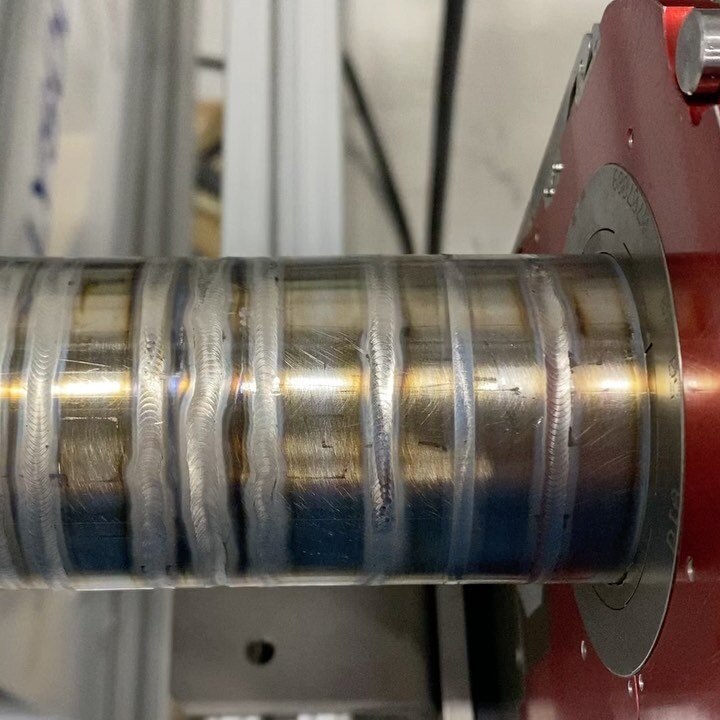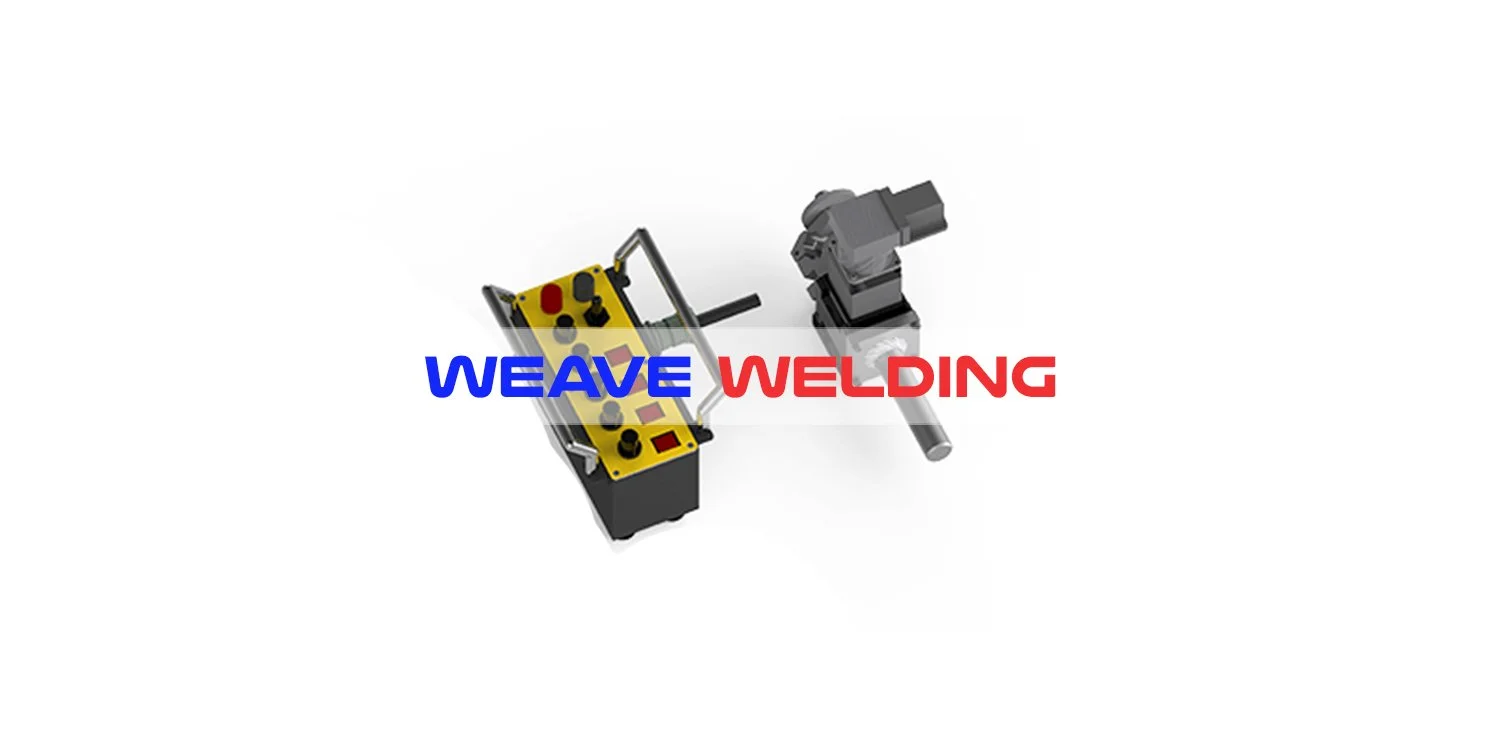
Weaving is what a welder does by hand when the gap is wider than a single bead. The torch swings side to side, pausing at each toe to tie into the parent metal, and the bead comes out wide, flat and fused at both edges. Done by hand it is a skill; done by machine it is a setting.
A weaver takes three parameters off the operator's hands. Weave width sets how far the torch travels either side of centre. Weave speed sets how fast it crosses. Dwell sets how long it pauses at each toe, independently on the left and the right — which is what lets you hold longer on the vertical leg of a fillet than on the horizontal one.
There are two motions. A linear weaver moves the torch in a straight line across the joint, which suits v-groove butt welds. A pendulum weaver swings the torch through an arc, which suits fillet welds in a corner joint where the torch needs to change angle as well as position.
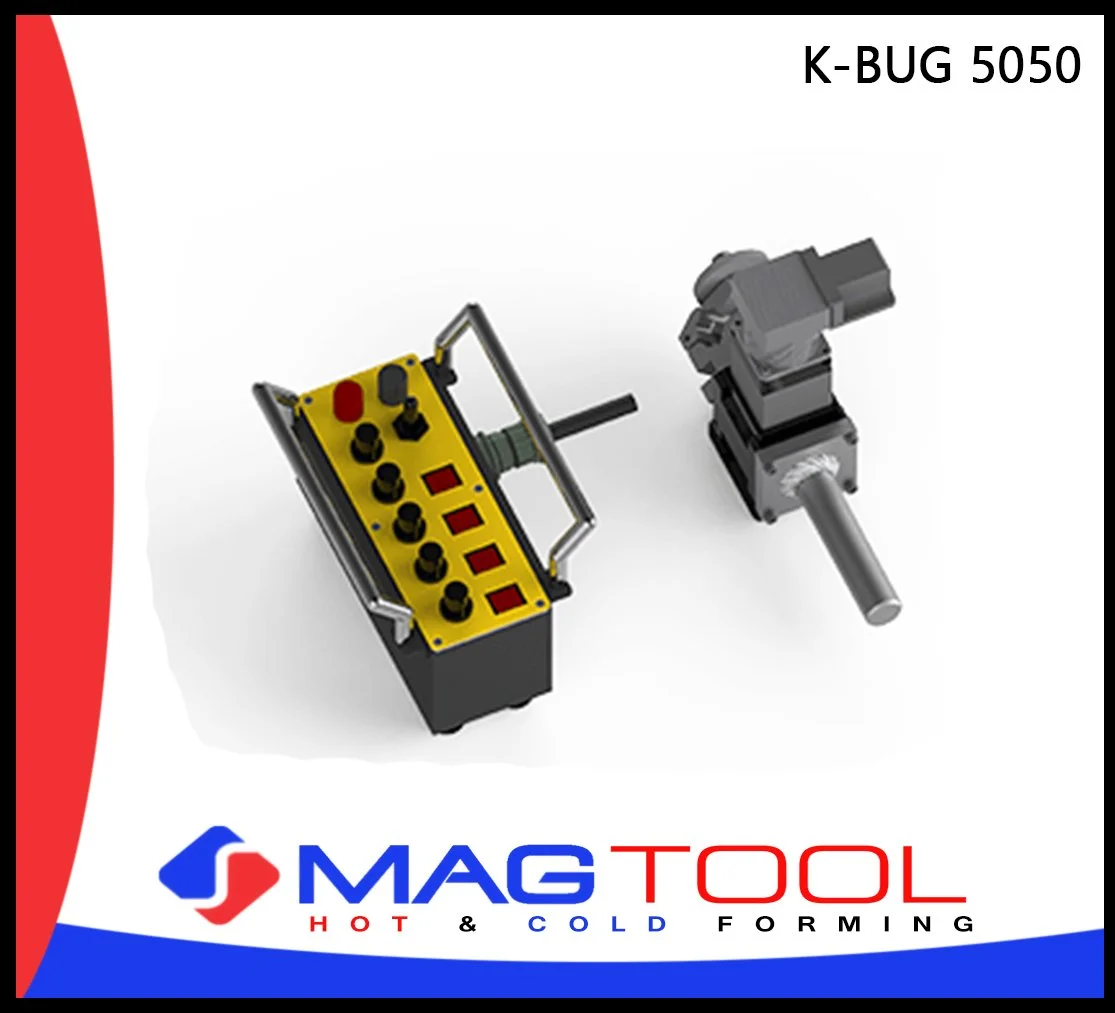
These machines are modular. Every one of them mounts either on a drive carriage running on track, or directly on a welding fixture — so a weaver is usually bought to add capability to equipment you already own rather than as a standalone purchase. Two of them are self-contained units with their own controls; the other three are heads driven from a Bug-O control module.
Tell us the joint geometry, the position it is welded in and what you are running now. The right weaver depends almost entirely on the joint, and the wrong one is an expensive way to make a bead that is too wide.