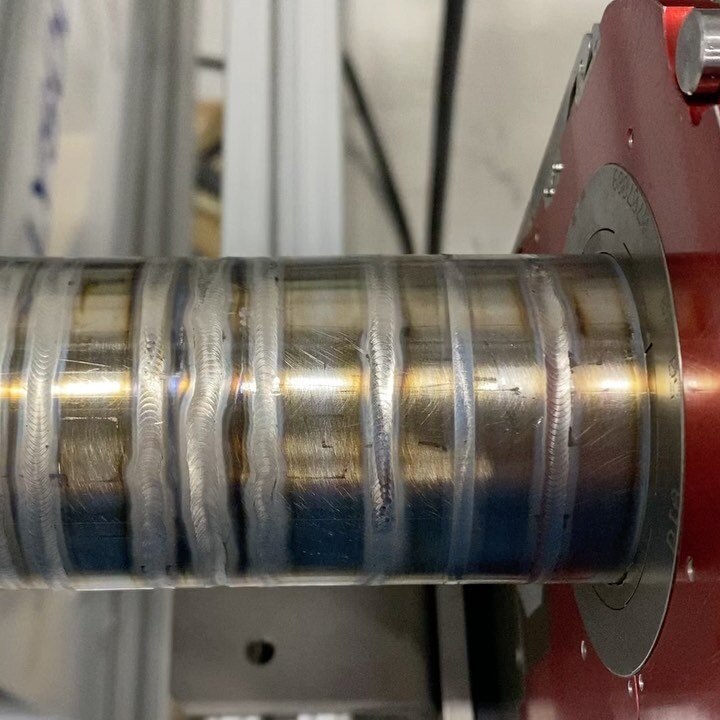
Welding a nozzle into a vessel by hand means walking around it, and every time the welder repositions, the weld changes. A circle welder rotates the torch around the joint at a set speed instead, so the bead is identical the whole way round and the operator stands still.
The feature that makes multi-pass work possible is the collector ring. Cable and wires pass through it, so the machine can rotate continuously in either direction for as many passes as the procedure needs without anything wrapping up or tangling.
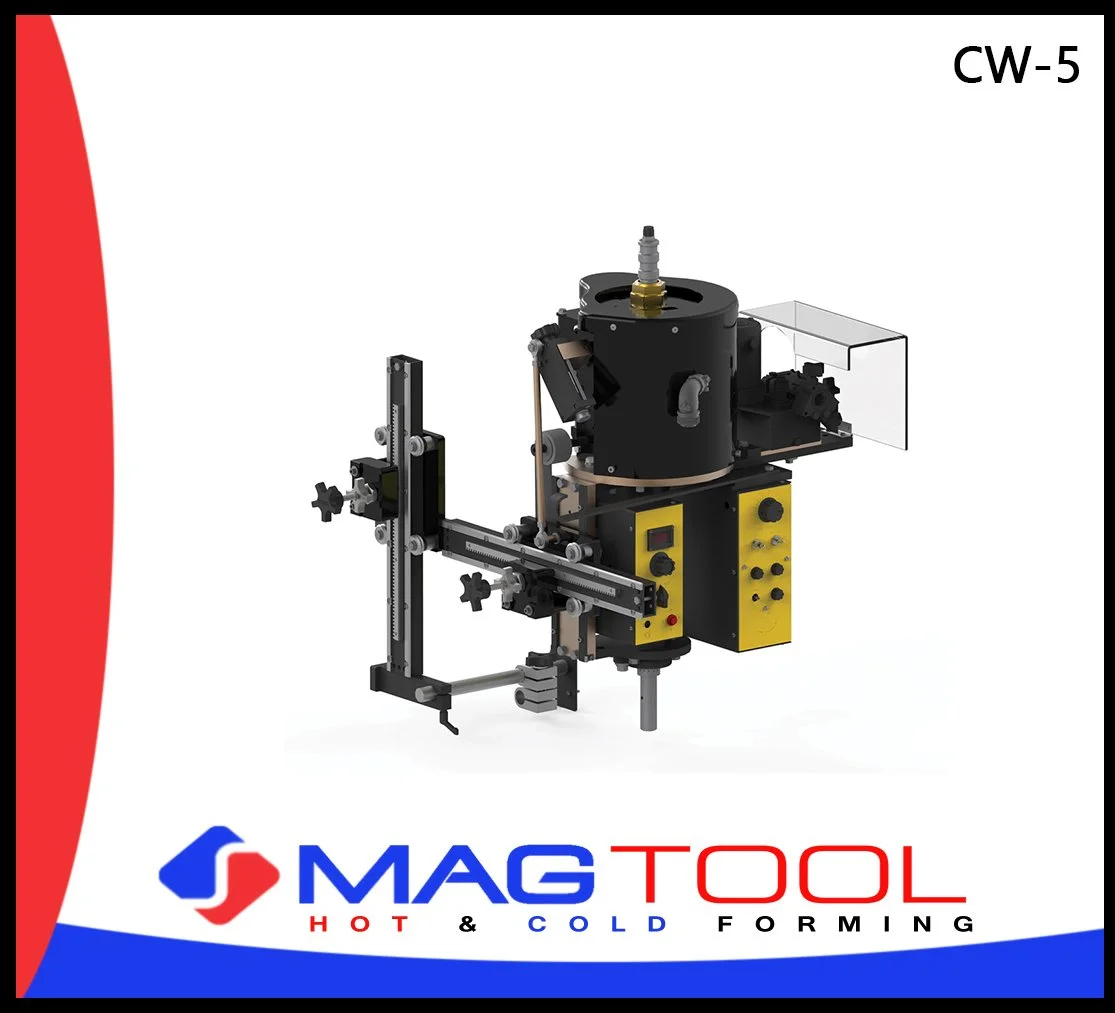
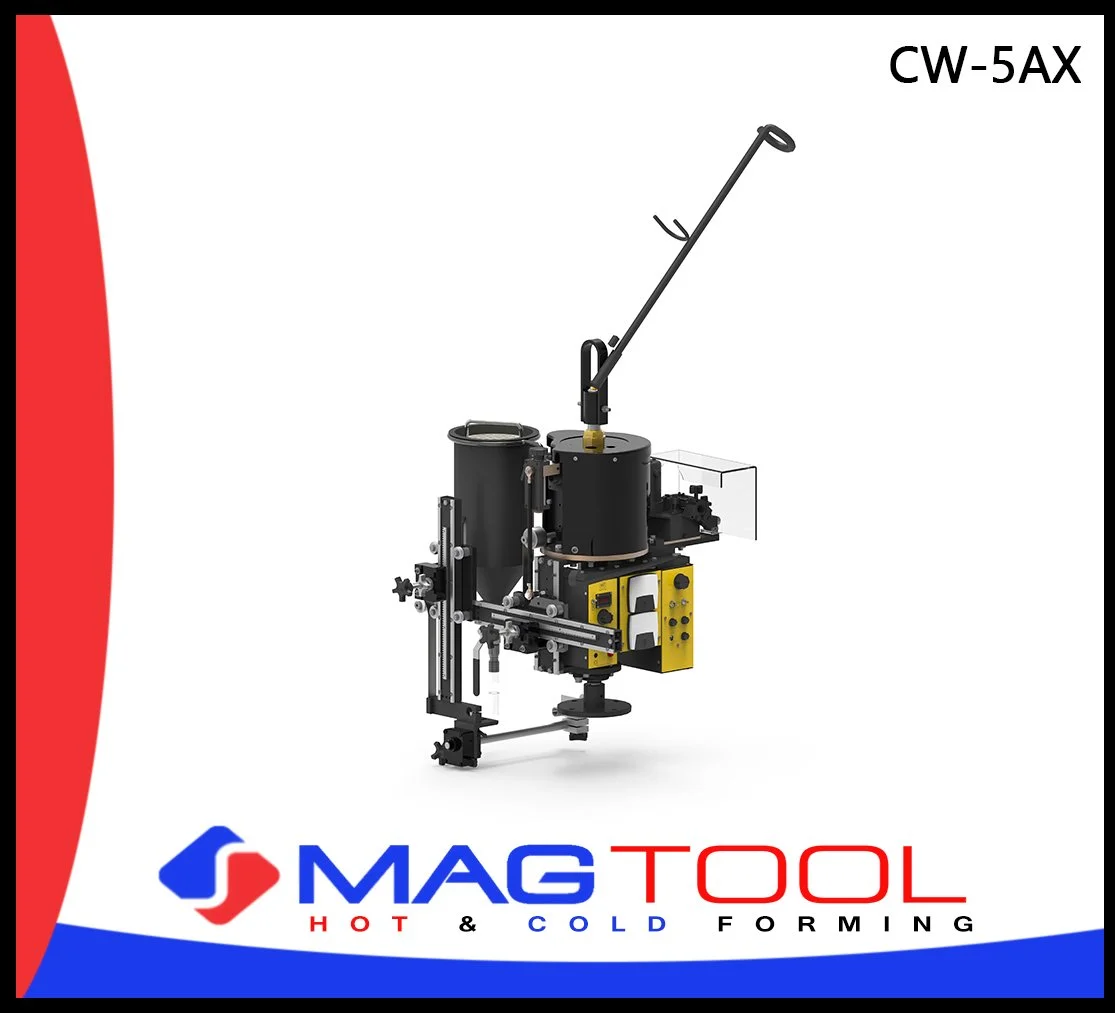
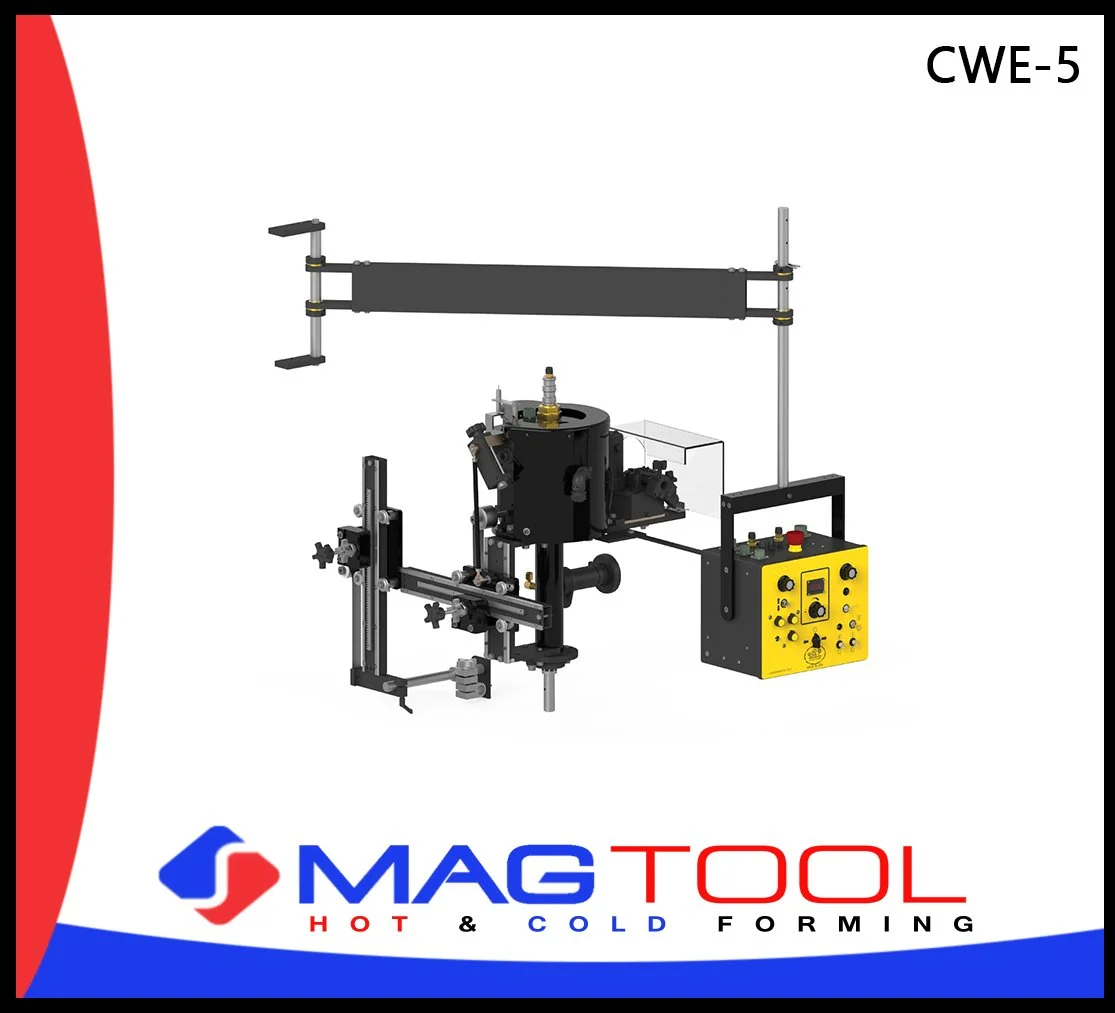
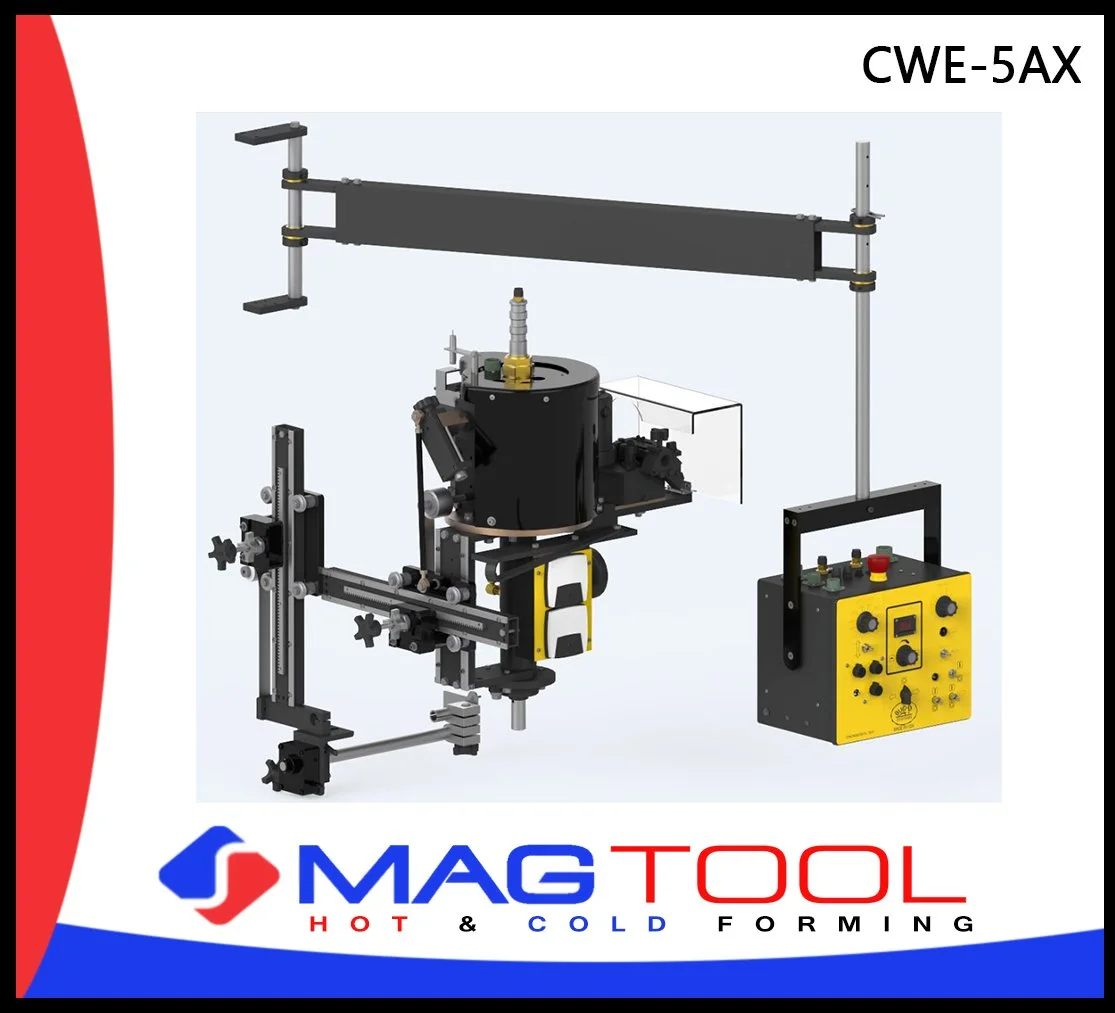
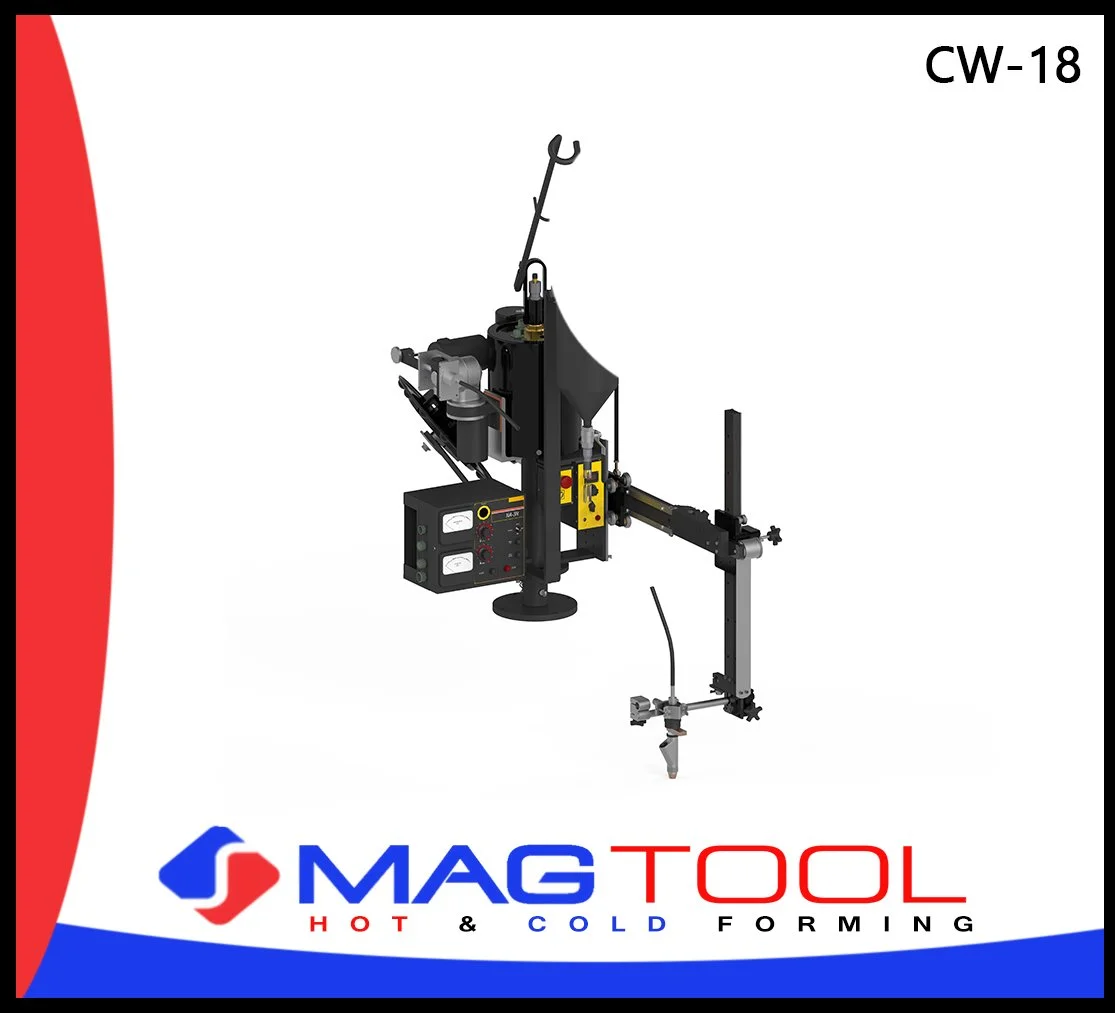
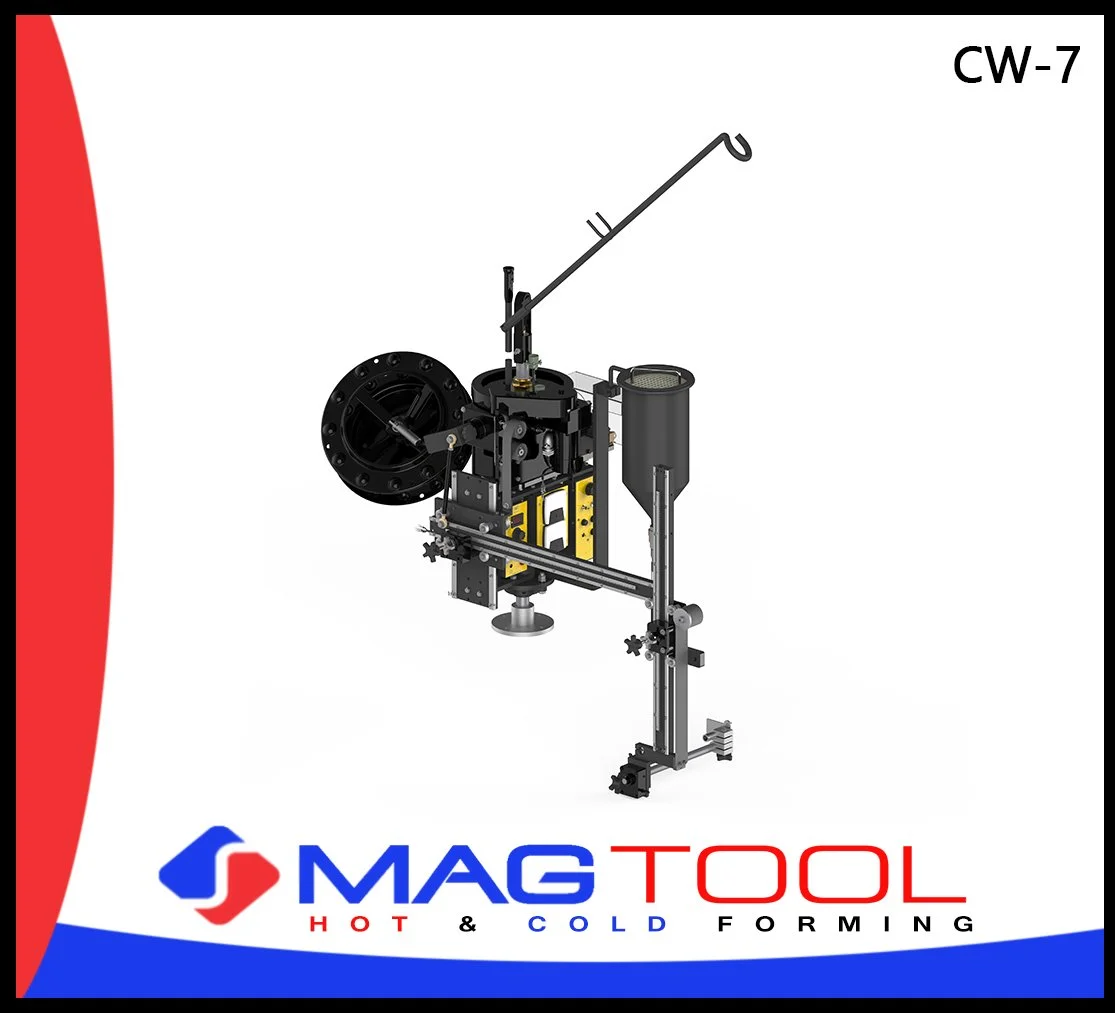
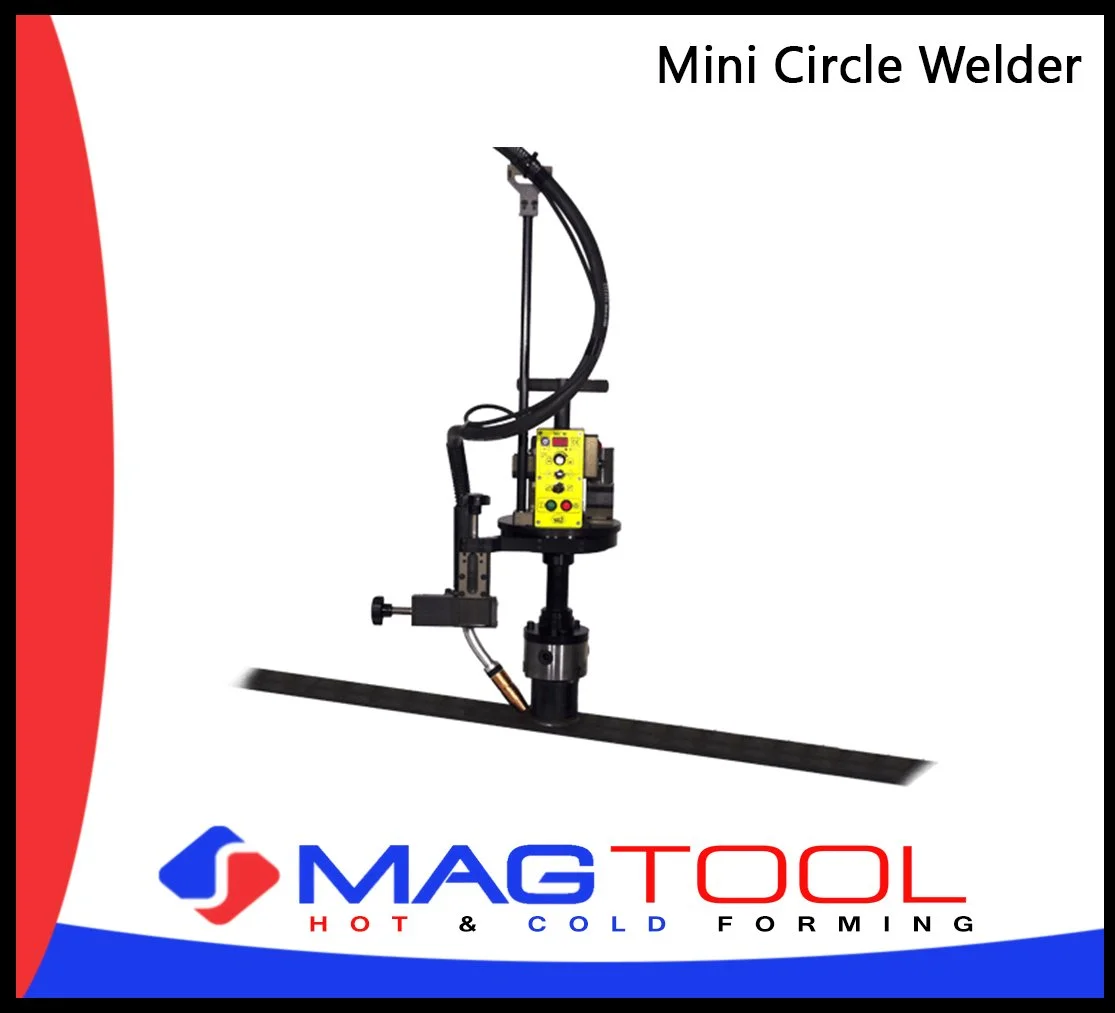
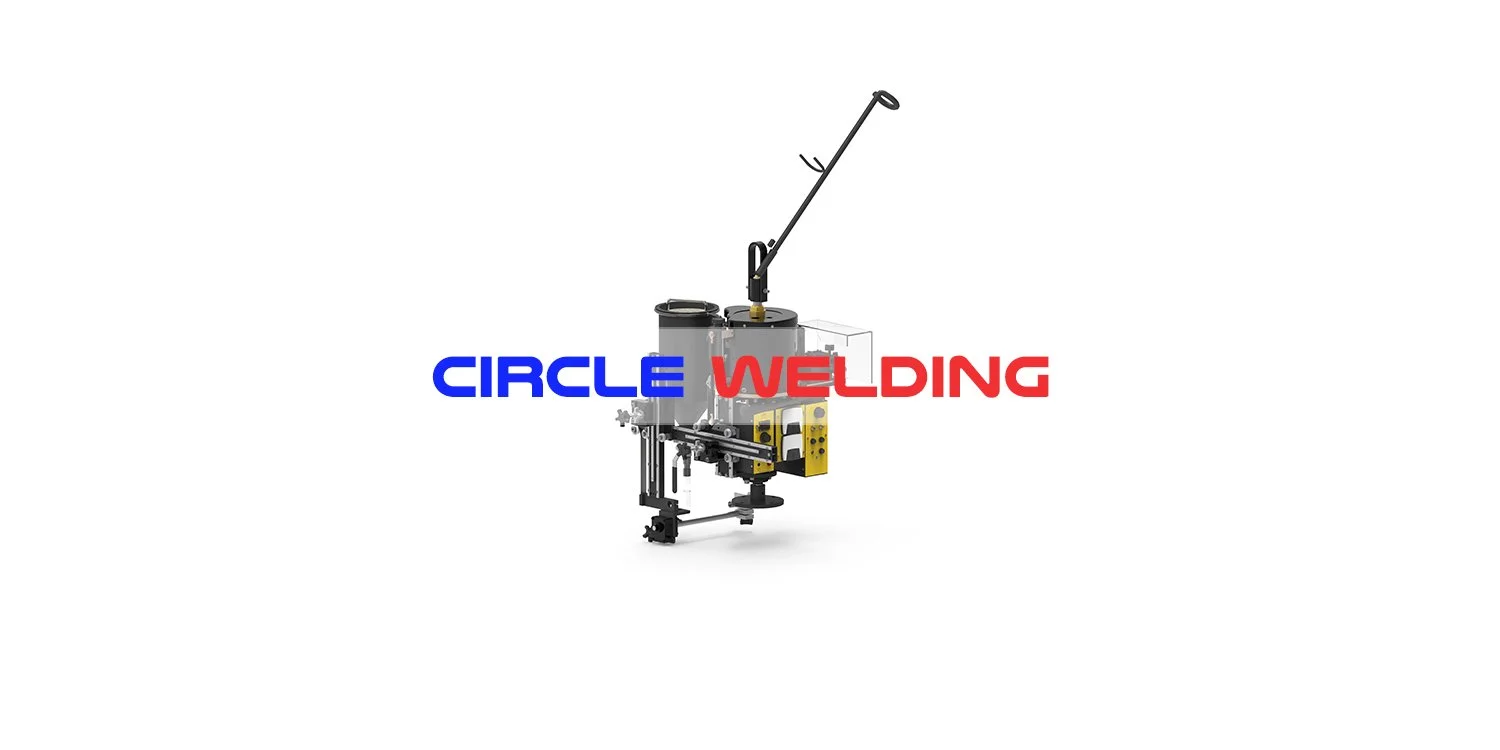
The range is a size ladder. The CW-5 family covers 1″ to 12″ and mounts on a carriage or monorail. The CW-7 covers 6″ to 24″ standard — 10″ to 50″ with the optional build — and mounts on a three-jaw chuck. The CW-18 is sub-arc only and covers 10″ to 50″. There is also a battery-powered mini machine for small tubes and tower brackets.
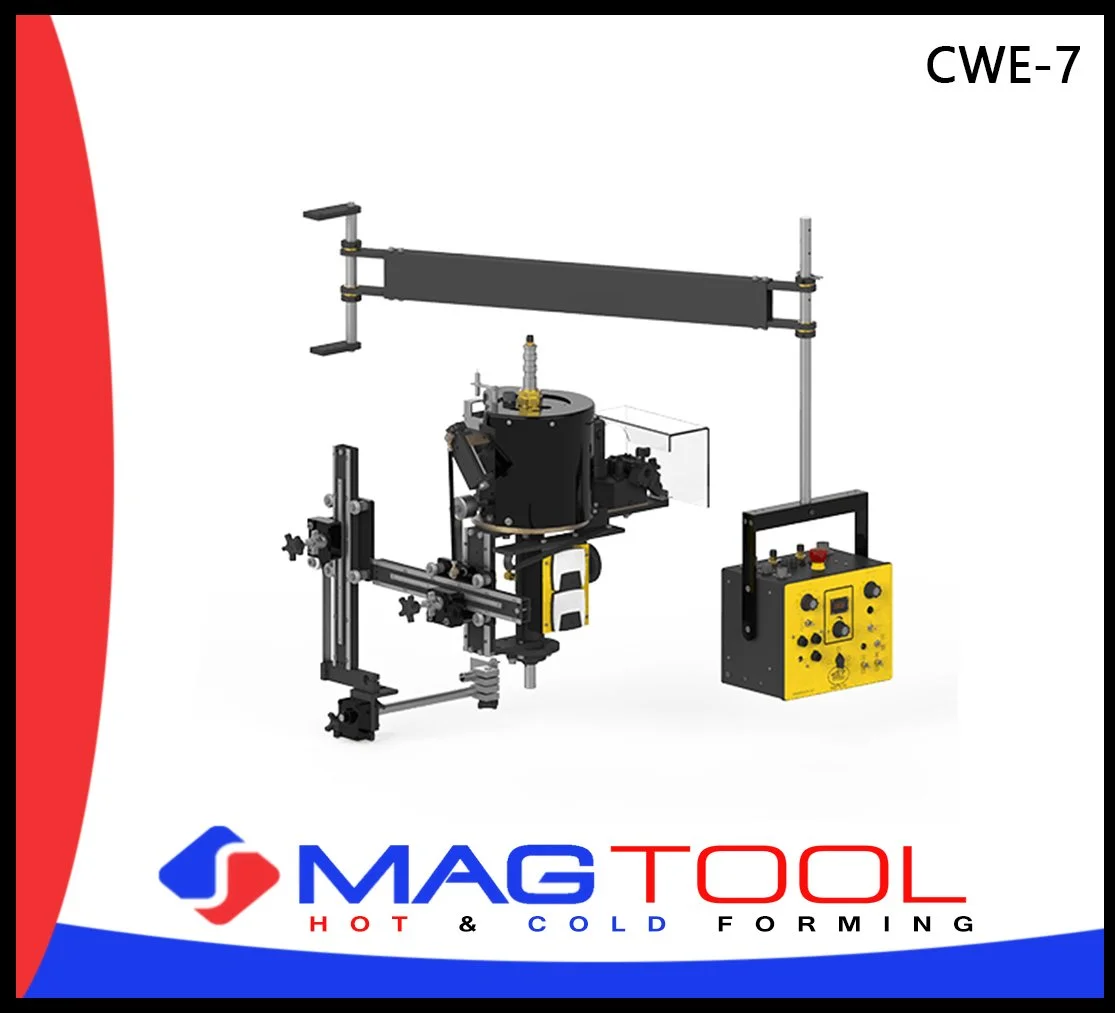
Two letters in the model number tell you what you are getting. AX means the sub-arc capable build, rated at 500 amps rather than 300, and it arrives with a meter kit, torch angle adjuster and flux hopper. A CWE prefix means the machine comes with a remote control box — digital rotation speed readout, wire feed controls, adjustable overlap, and a one-button automatic cycle that welds around, overlaps, stops and returns to the start position.
Tell us the nozzle diameter, the process and whether the work rotates or the machine has to. That is enough to point at one or two machines rather than eight.